
Spinal Cord Injury Recovery in Ontario 2026: How a Certified Rehabilitation Team Helps You Rebuild Strength and Independence
A spinal cord injury can change nearly every aspect of daily life, affecting movement, strength, sensation, balance, and independence. While every injury is unique, timely rehabilitation plays a vital role in helping individuals maximize their recovery and adapt to new physical challenges. In Ontario, multidisciplinary rehabilitation programs bring together healthcare professionals who work collaboratively to improve mobility, function, and quality of life through personalized treatment plans. Exercise therapy, occupational therapy, physiotherapy, and ongoing medical support all contribute to long-term progress. Understanding spinal cord injury recovery in Ontario helps patients and families make informed decisions about rehabilitation services, available funding options, and realistic recovery expectations. This guide explains how comprehensive rehabilitation supports recovery and promotes greater independence after a spinal cord injury.
Understanding Spinal Cord Injury Recovery
Every spinal cord injury recovery journey in Ontario is different because outcomes depend on the location and severity of the injury, the individual’s overall health, and how quickly rehabilitation begins. Recovery may involve improving mobility, increasing strength, enhancing balance, learning adaptive techniques, and maximizing independence in daily activities.
Although some people regain significant function, others focus on developing new skills and using assistive technologies to maintain independence. Early intervention and consistent rehabilitation often provide the greatest opportunity for functional improvement.
A structured spinal cord injury recovery plan in Ontario focuses on achievable goals while supporting both physical and emotional well-being throughout the rehabilitation process.
Spinal Cord Rehabilitation Programs
A comprehensive spinal cord rehabilitation program in Ontario typically involves a multidisciplinary team that may include physiotherapists, occupational therapists, exercise therapists, physicians, nurses, psychologists, social workers, and other rehabilitation professionals.
Treatment plans are customized to each individual’s abilities and goals. Rehabilitation may include mobility training, strength development, balance exercises, wheelchair skills, transfer training, pain management, education, and functional independence training.
Participating in a spinal cord rehabilitation program in Ontario helps patients develop practical skills needed for home, work, and community life while improving overall confidence and safety.
The most effective spinal cord rehabilitation program in Ontario evolves as recovery progresses and rehabilitation goals change.
The Role of Exercise Therapy
Structured SCI recovery exercise therapy GTA programs are designed to improve strength, endurance, flexibility, cardiovascular fitness, and functional movement while considering each patient’s medical condition and physical limitations.
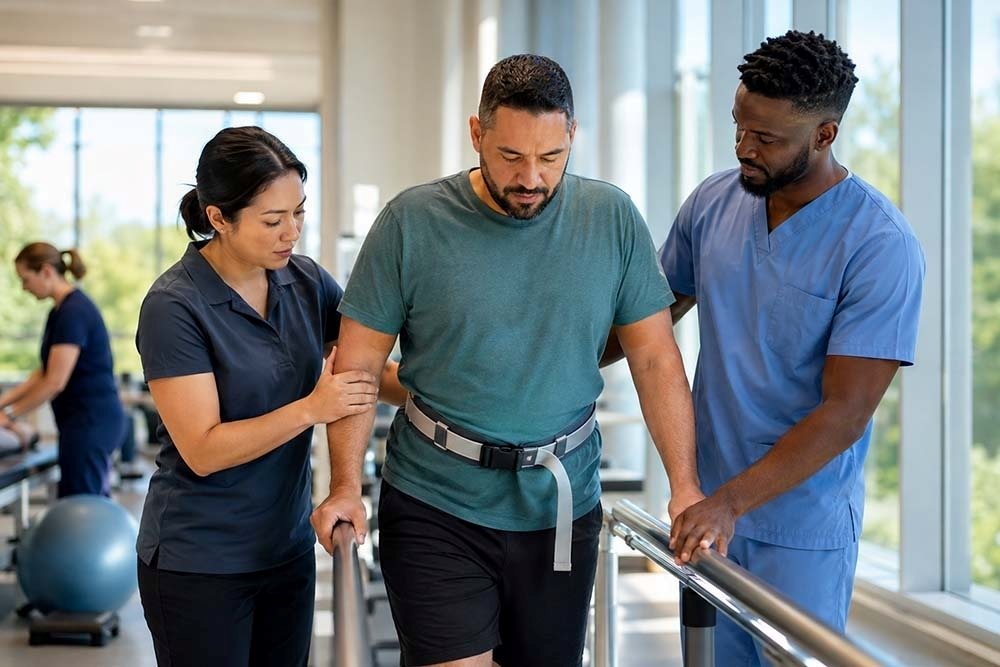
Exercise therapy may include assisted movement, resistance training, balance exercises, gait training for appropriate candidates, stretching, and functional task practice under professional supervision. Programs are carefully adapted to reduce injury risk while promoting safe physical activity.
Many patients participating in SCI recovery exercise therapy in the GTA experience improvements in muscle conditioning, circulation, mobility, and overall physical function as part of a broader rehabilitation program.
A personalized SCI recovery exercise therapy GTA plan also supports long-term health by encouraging regular physical activity appropriate for each stage of recovery.
Accessing Rehabilitation in Brampton
Individuals seeking spinal injury rehab in Brampton have access to rehabilitation providers offering services that may include physiotherapy, occupational therapy, exercise therapy, pain management, neurological rehabilitation, and functional recovery programs.
Depending on the circumstances of the injury, rehabilitation services may be funded through private insurance, automobile insurance following eligible motor vehicle accidents, workplace insurance where applicable, government-funded healthcare programs, or other available funding sources.
Choosing experienced providers for spinal injury rehab in Brampton helps ensure coordinated care, personalized treatment planning, and ongoing support throughout recovery.
Patients considering spinal injury rehab in Brampton should discuss available rehabilitation options and funding eligibility with their healthcare provider or rehabilitation clinic.
Building Long-Term Independence
Recovery from a spinal cord injury extends beyond physical rehabilitation. Ongoing education, adaptive equipment, emotional support, family involvement, and community reintegration all contribute to improving independence and quality of life.
Working closely with a certified rehabilitation team helps individuals establish realistic goals while developing the skills and confidence needed to participate more fully in everyday activities.
Frequently Asked Questions
Q1. What rehabilitation services help spinal cord injury survivors in Ontario?
A: Rehabilitation may include physiotherapy, occupational therapy, exercise therapy, neurological rehabilitation, mobility training, pain management, assistive device assessment, psychological support, and education delivered by a multidisciplinary healthcare team.
Q2. How does exercise therapy support spinal cord injury recovery?
A: Exercise therapy helps improve strength, flexibility, endurance, balance, circulation, functional mobility, and overall physical conditioning. Programs are customized to each individual’s abilities and rehabilitation goals while being supervised by qualified professionals.
Q3. Is spinal cord injury rehabilitation covered by insurance in Ontario?
A: Coverage depends on the cause of the injury and the individual’s insurance benefits. Rehabilitation may be funded through private health insurance, automobile insurance for eligible motor vehicle accidents, workplace insurance where applicable, or other available funding programs. Patients should confirm eligibility with their insurer and rehabilitation provider.
Q4. What milestones can I expect during spinal cord injury rehabilitation?
A: Recovery milestones vary significantly based on the severity and location of the injury. Common goals may include improved mobility, greater strength, increased independence with daily activities, enhanced balance, better endurance, improved wheelchair or transfer skills, and greater participation in home, work, and community life. Rehabilitation teams establish individualized goals based on each patient’s condition and progress.

Leave a Reply